
Smith+Nephew CORI™ · Hinduja Healthcare Surgical, Khar, Mumbai
The World's Only
Handheld Robotic
Knee System.
No pre-op CT scan. No radiation. Live intra-operative 3D mapping. Sub-millimetre precision. Walk within 24 hours.
24hrs
Walking Within
3Nights*
Hospital Stay
3–4Weeks
Full Recovery
1st
Robot for Revision TKR
Background
What is the CORI Robotic Surgical System?
Launched in July 2020 after FDA clearance, CORI™ by Smith+Nephew evolved from their earlier NAVIO system — smaller, faster, and more precise. Unlike arm-mounted robots, CORI is held directly by the surgeon, combining robotic accuracy with human dexterity.
The CORI Surgical system is an advanced, image-free handheld robotic platform developed to assist orthopaedic surgeons in executing highly precise total knee, partial knee, revision knee, and total hip replacement procedures.
Unlike older, bulkier robotic technologies that rely on massive mechanical arms, CORI utilises compact, software-driven handheld instrumentation. It gives the combined benefits of computer-guided precision and complete tactile control during bone preparation.
Patients who opt for robotic-assisted surgery benefit from zero pre-op radiation (no CT scans), preservation of healthy tissue, and an overall faster recovery to get back to pain-free daily life.
Dr. Vivek Allahbadia was among the first surgeons in Mumbai to adopt the system and operates it exclusively at Hinduja Healthcare Surgical, Khar.
Perks of CORI™
Proven track record in complex cases and revision surgeries to assist surgeons provide better output.
FDA Cleared · July 2020
US regulatory approval — the global benchmark for surgical device safety and efficacy.
Handheld — Not Autonomous
The surgeon controls every movement. CORI guides precision and stops unsafe cuts — it never acts independently.
4× Faster Than Its Predecessor
Twice the cutting volume of the NAVIO system. Shorter OR time. Fewer positioning errors than conventional instruments.
Smallest OR Footprint in Class
Purpose-built for high-volume centres. Portable, compact, ideal for Hinduja Khar's arthroplasty programme.
Broader Indications Than Any Competitor
Total knee, partial knee, and revision TKR — plus computer-guided hip. No other robotic system covers this range.
Step by Step
How CORI Works
Bone landmark registration
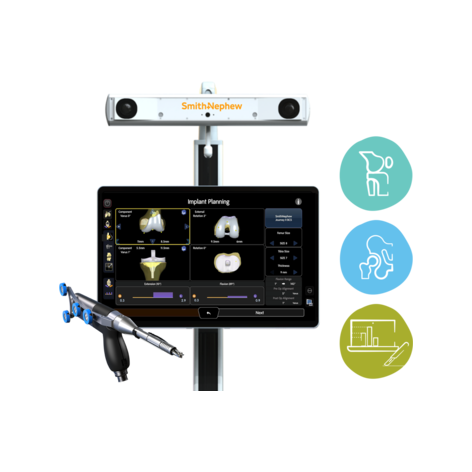
At the start of surgery, Dr. Allahbadia uses the CORI probe to register specific bone landmarks. RI.KNEE AI software instantly constructs a 3D digital model of your unique knee anatomy.
Digital Tensioner — objective balance data
Before any bone is cut, the Digital Tensioner measures ligament laxity and joint gap. Objective numerical data replaces surgeon feel on the most critical step.
Personalised implant plan
Dr. Allahbadia selects the exact implant size, position, and alignment on-screen — matched to your bone structure, not a population average.
Robotic-guided bone resection
The handheld robotic burr executes the plan with 300+ feedback signals per second. An automatic safety stop activates if the tool approaches the boundary of the planned zone.
Implant confirmed and placed
System confirms placement matches the plan exactly. First-time accuracy means minimal soft tissue disruption — the primary driver of fast recovery.
Sub-mm
Bone Cut Accuracy
Zero
Pre-op Radiation
Clinical Advantages
Why CORI Produces Better Outcomes
Fully Personalised
3D model built from your anatomy intra-operatively. Implant size, position, and alignment are uniquely matched to your bone structure.
Objectively Balanced
Digital Tensioner delivers numerical ligament data before cuts begin — more consistent joint balancing than any manual technique.
Only Robot for Revision
Image-free smart mapping works even with existing implants in place. The world's first robotic system approved for revision total knee surgery.
PCL Preservation
Paired with Smith+Nephew implants, the CORI system can preserve the PCL — allowing a more natural gait that patients describe as feeling like their original knee.
Implants That Last Longer
Accurate positioning reduces wear. A well-aligned implant lasts significantly longer — particularly important for younger, active patients.
More Patients Eligible
High BMI, unusual deformity, failed previous surgery — CORI's adaptable intra-op planning makes previously refused cases treatable.
See It in Action
CORI — Explained
CORI Surgical System — How It Works
The CORI platform, RI.KNEE software, and real-time robotic-guided bone cutting.
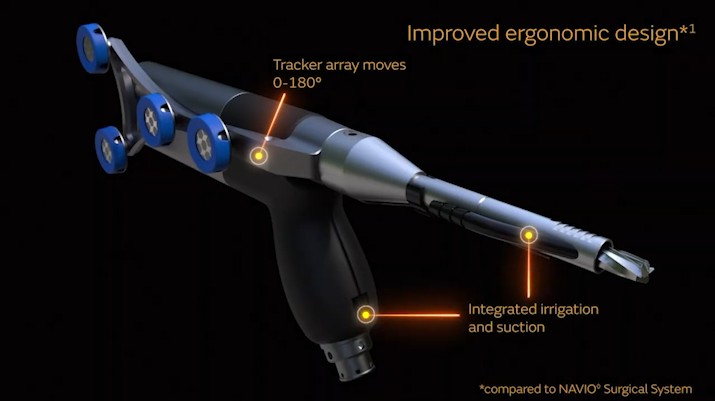
CORI — The System in Detail
A closer look at the handheld robotic burr, Digital Tensioner, and imageless knee mapping.
FAQs
Common Questions
Is CORI an autonomous robot?
No — the surgeon controls every movement. CORI guides and prevents unsafe cuts but never acts independently.
I've been refused by other surgeons — could CORI help?
The CORI Robotic System was made to tackle complex cases. Under skilled hands of Dr. Allahbadia, complex, high-BMI, and revision cases can be tackled with proper guidance and ease.
What makes Dr. Allahbadia's approach different?
He combines 28 years of hands-on arthroplasty experience with the world's most advanced handheld robotic platform — and a published technique for high-risk patients that no other Mumbai surgeon has matched.
Will it cost more than conventional surgery?
The upfront cost is higher. However, a shorter hospital stay, faster return to work, and lower revision rates typically reduce the total lifetime cost of care.
Is CORI suitable for partial knee replacement?
Yes — CORI supports unicompartmental (partial) and total knee replacement. Partial replacement preserves healthy bone and ligaments, often producing a more natural-feeling knee.
What does recovery actually look like?
Most patients stand the day after surgery, go home the following morning, and return to daily activities within 2–3 weeks — with minimal pain throughout, because robotic precision reduces soft tissue trauma.
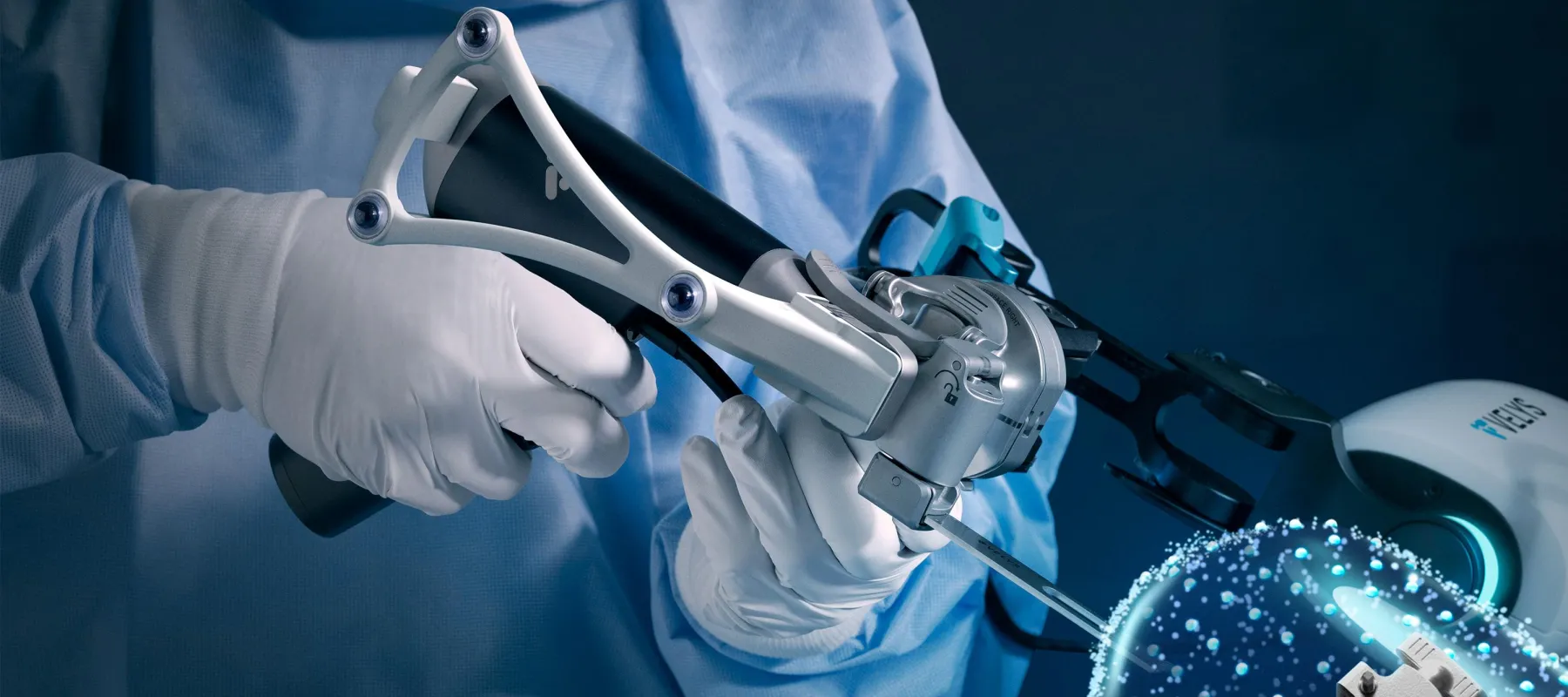
Is CORI right
for you?
Bring your X-rays. Dr. Allahbadia will assess your knee personally and give you a clear, honest answer.
+91 98202 18181 · Hinduja Healthcare Surgical, Khar West, Mumbai